
Runner’s knee is a dull aching pain around the front of the knee with typical symptoms like pain & rubbing, grinding or clicking sound of the knee cap.
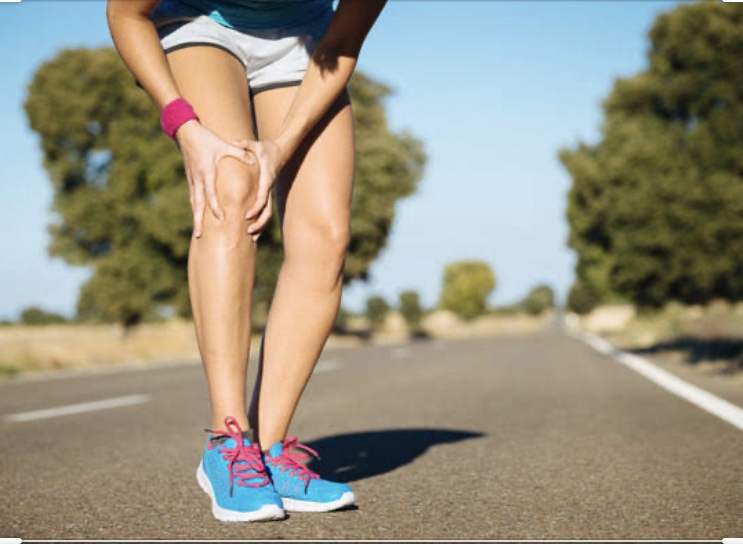
Cartilage under the knee cap(patella) is a natural shock absorber. But when our knees are overused or injured, chondromalacia may develop ,which is damage to the cartilage under the knee cap.
Running is probably one of the best exercises to relief stress and anxiety, to reduce the risk of heart disease, diabetes and obesity; but Running is also labeled as a high-risk sport, as repeated pounding takes its toll on bones and particularly on joints such as the knee and makes it susceptible to injury. Nearly 30-50% of all runners get knee pain from running ever year which is a pretty high rate. But often it is not the “Running” which causes the pain, it’s “the way people run” causes the pain and injury.
Hence applying the correct biomechanics while running is of upmost importance. Also one has to be very clear and particular about the necessary homework to condition-strengthen the prime muscles involved in running and to prepare them to take the load of the joints while running. Some key points are listed below:
1.Avoid Heel striking

Each time runners do ground contact through “heel striking” mode, it causes impact forces to pass through the heel & up the leg, which places strain on the muscles and tendons. However , the force pattern changes dramatically with “ mid-foot strike”, because every impact immediately distributes forces throughout the foot, ankle & there is no slap-down action.
So avoid heel striking, let your legs swing rear wards and not forward. Always lean from ankle & let your stride open up behind you.

Let your feet land beneath you & not in front of you.
2.Lean forward while running
3. Run with your feet pointed in the direction you are headed
Avoid torquing your knee with every foot strike, rotate your entire leg inward towards the centerline (Medial Rotation), it will strengthen the adductors & will realign your legs. Foot splay can create inflammation to the Iliotibial band (IT band) which is attached to the Tibia at its lower end just below your knee; and this misalignment of leg could be mistaken for other knee problems.
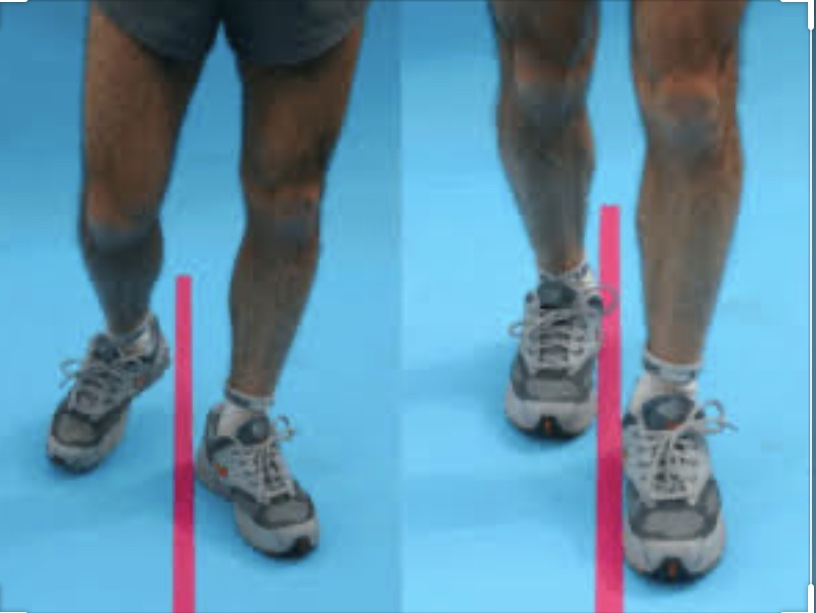
Increase Medial Rotation of your legs over a number of weeks to give your legs time to adjust to their new direction of movement. Changing Biomechanics of your body takes time and persistence.
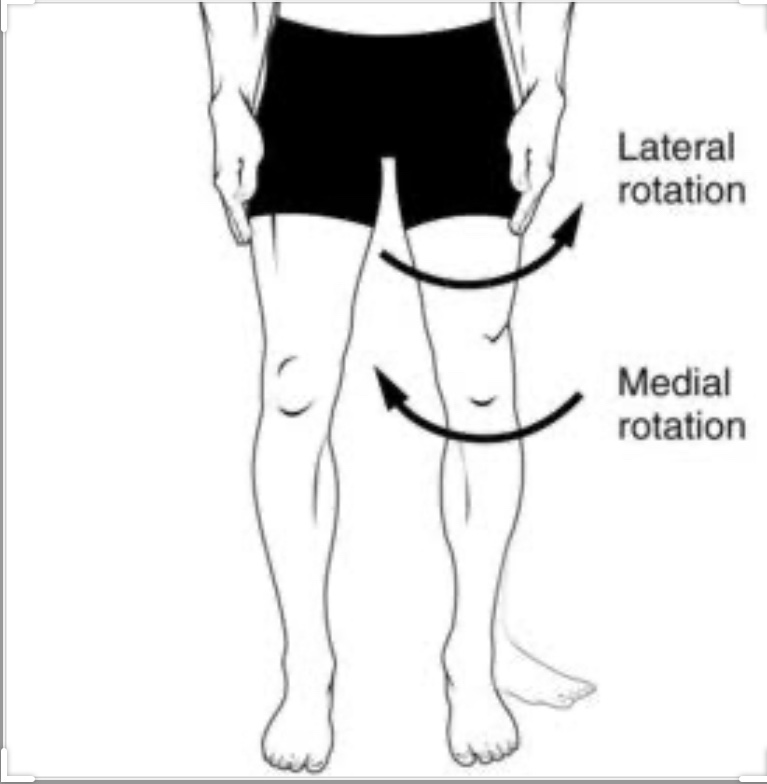
4.Work on the ‘form’ rather than relying on cushioned shoes
Fix your running form from inside out with correct techniques and biomechanics.Go for low profile neutral shoe and run with a shorter stride to reduce impact.Work towards a better and softer landing.
Reducing torque and impact are the two best places to work on your running form
5. Warm up and Cool down
A good warm up is extremely important before you give your muscles vigorous workout. It dilates the blood vessels & ensures a good supply of oxygen to the muscles. Also it raises muscle temperature for optimum flexibility and efficient performance.
Research shows that dynamic stretching is more beneficial than static stretching. You can start your warm up with 5-10 mins of brisk walking, jogging slowly, or even cycling on a stationary bike. Dynamic stretching like : jumping jacks, walking lunges, opposite toe touch are also very useful. Instead of starting out racing, you should start running slowly and gradually build up your speed, also you should breath easily.
For Cool Down phase, walk or slow jogging for 5-10 min once you end your running ensures that your BP and heart rate are not dropping suddenly, and prevents light headedness. Static Stretching is beneficial in cool down phase which includes : Hamstring and Quadriceps stretch, calf stretch, IT band stretch, back stretch, triceps stretch.
One should not rush and hold each static stretch for 15-30 secs, make sure stretching is not causing pain or don’t reach a point where it is causing pain, stretch both sides and don’t hold your breath.
Treating Runners Knee
While ice packs and NSAIDrugs will give relief for a short period of time, exercise regime and correcting biomechanics will cure one fully.
There is a vast variety of strengthening and stretching program to treat runners knee.
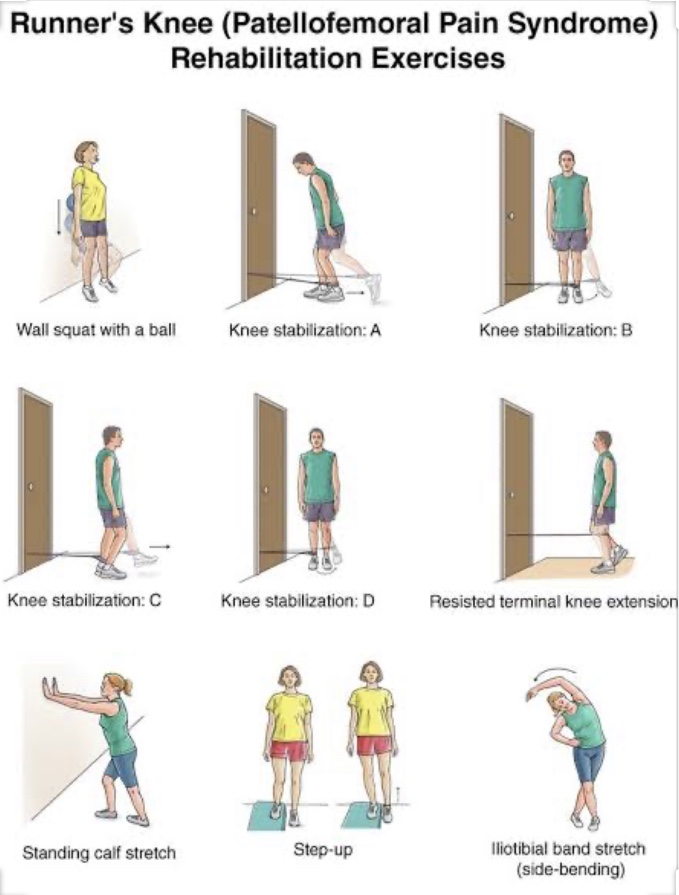
1. Quadriceps strengthening ( start with Isometric- progression with resistance)
2. Gluteal strengthening (start with isometrics- progression with resistance)
3. Stretching of tight Hamstring and Iliotibial band.
4. Calf stretch.
5. Plyometrics
6. Advanced balancing program
Whenever your knee is injured or biomechanics is poor, VMO (vestus medialis oblique) is the most common component of Quadriceps to lose its strength.
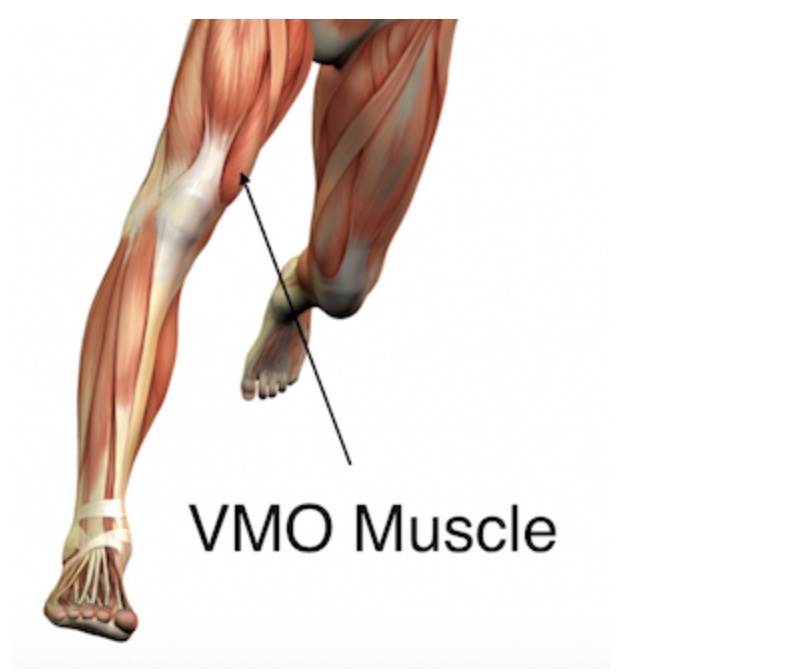
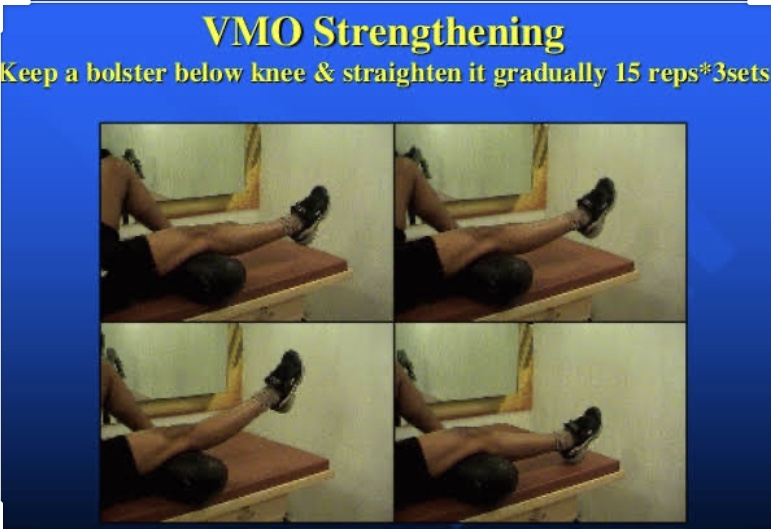
So a specific strengthening exercises program for VMO to make it strong is very essential to both prevent injury in the first place & as part of the Rehabilitation program.
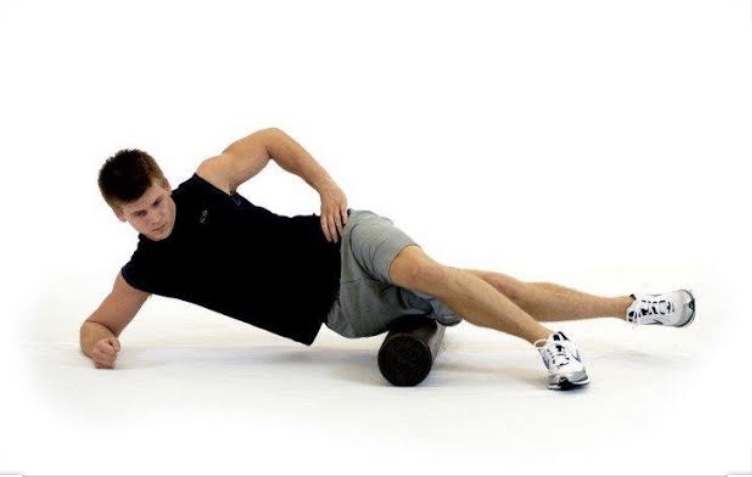
7. Regular foam rolling
Foam rolling directly on the IT band will help to increase the elasticity of the fascia & return knee back to its original positioning.
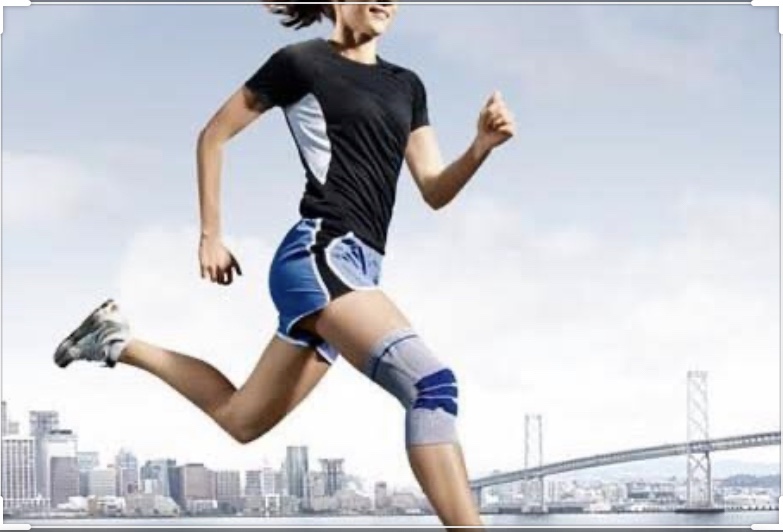
8. Running with knee support is a great option as it provides compression and support to the joint and helps the runners run without feeling pain.
Taking a good care of the knees should be a high priority especially if you want to enjoy running year after year.


 In House Fitness